long shot
Reviewed by Brian Burmeister, Iowa State University
6 january 2017 archive
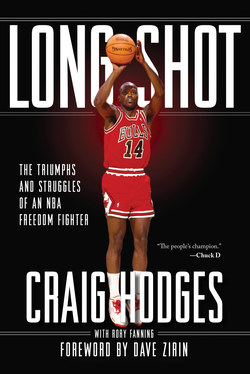
Craig Hodges was one of the NBA's greatest three-point shooters of his or any generation. Twice he led the league in three-point shooting percentage. He had incredible performances in the NBA All Star Weekend's 3-Point Contest, winning the competition three years in a row (an accomplishment so rare it is a distinction held only by Hodges and Larry Bird). And to top it all off, Hodges won two world championships with the Chicago Bulls. His was a memorable, exciting career, but a career cut short.
For each of his many accomplishments as a player, Hodges is perhaps best known today for the way his career abruptly ended. Hodges was a vocal proponent of social justice and economic equality. He spoke out in the wake of the Rodney King beating. He openly invited teammates to see Minister Louis Farrakhan speak. He led efforts to boycott Nike. Most famously, during the Bulls 1992 visit to the White House, Hodges—who wore a dashiki to the event—handed President George H.W. Bush a handwritten letter urging him to do more to address racism and systemic challenges faced by African Americans. And for each of these reasons, Hodges' playing days were prematurely numbered.
In his autobiography, Long Shot: The Struggles and Triumphs of an NBA Freedom Fighter, Craig Hodges reflects upon the public and personal details of his life. From his upbringing in an activist household in Chicago Heights—he writes, "I learned early that change was something that happened only if we made it happen"—through the high school, college, and professional basketball eras of his playing career, Hodges shares the events that shaped him, the driving forces in his life, and fascinating insider stories of life in the NBA.
Along the way, Hodges balances the deeply personal—how his marriage fell apart, for instance—with unforgettable anecdotes—including Michael Jordan cursing about the President of the United States while in the locker room during the NBA Finals. Hodges' stories are compelling, inspiring, at times funny and at times infuriating, and collectively paint a vivid picture of the man he is and strives to be.
But the theme which perhaps leaves the most lasting impression is how much major league sports are first and foremost a business. Hodges shares tales of the outrageous business practices of former Los Angeles Clippers owner Donald Sterling, describes the perceived politics of various front offices, and, ultimately, the reasons that contributed to the end of his own career. Hodges' legacy, more than his three-point shooting accolades, is that he was blackballed from the NBA for his activism. While there are some who deny this, Hodges provides gripping evidence that the NBA wanted its players to only be players, to leave their politics at the door, and that anything players would do which might bother some fans/customers was unwelcome. And, in the case of Hodges, past the point of acceptable.
Long Shot is a beautifully written, brutally honest book. If you loved the Michael Jordan-era Chicago Bulls, if you love black history, or if you are fascinated by the politics of sports, I highly recommend this book. Simply put: Craig Hodges' life is incredible and Long Shot is invaluable. As political sportswriter Dave Zirin writes in the book's foreword: "It is time to remove Craig Hodges from exile status and place him where he has always belonged: on the short list of the activist athletes who stood tall, paid the price, and now live their lives perhaps scarred but without regrets."
Long Shot: The Struggles and Triumphs of an NBA Freedom Fighter by Craig Hodges and Rory Fanning. Chicago: Haymarket, 2017.
Copyright © 2017 by Brian Burmeister