dodgerland
Reviewed by Amy Essington
5 january 2017 archive
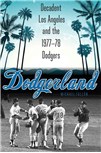
In Dodgerland, Michael Fallon focuses on a West Coast baseball team and the culture of the city in which it plays. A Dodger fan who writes about arts and culture, Fallon merges Dodger baseball with the culture of 1970s. Fallon reviews two consecutive seasons in which the Los Angeles Dodgers won the National League pennant and lost to the New York Yankees in the World Series. This is not a story driven by statistics, but by people and culture. The story includes four Toms – Tom Fallon, his grandfather; Tom Bradley, mayor of Los Angeles; Tom Wolfe, writer; and Tom Lasorda, Dodger manager – during the 1977 and 1978 baseball seasons. Each of the Toms connects the personal, political, cultural, and baseball worlds of Los Angeles.
The book is divided into two parts, divided by an interlude. Each part retells a baseball season, but with the context of broader social and cultural issues. The story is not one of struggle which leads to victory, but day-to-day decisions which may or may not bring the desired results. This was true for the Dodgers as well as for all four Toms. Tom Fallon, a small-business owner, who worked to support his family in a changing economy. Mayor Tom Bradley, the five-term mayor of the city of the Angels, who wanted to bring the 1984 Olympics to Los Angeles. Tom Wolfe, author of the 1976 New York article "Me Decade," whose analysis of Los Angeles described a cultural shift toward self-gratification. Tommy Lasorda, first-year manager, who managed well-known players with varying styles and personalities, including those who connected with the nearby Hollywood culture.
By focusing on the Los Angeles Dodgers, Michael Fallon shifts the narrative of the two seasons under review to a West Coast perspective. The story of the 1977 and 1978 regular season and World Series games between the New York Yankees and Los Angeles Dodgers has been told previously in books including Ladies and Gentlemen, the Bronx Is Burning, a 2006 book about New York City in 1977, by Jonathan Mahler. Michael Fallon patterns the structure of Dodgerland after The Bronx is Burning, but has changed the central character to the West Coast Los Angeles Dodgers. By focusing on the team which lost the World Series in both years, Fallon provides a different viewpoint of the same events. The glory of three consecutive homeruns by Reggie Jackson, for example, is seen by Dodger fans in a different light. This shift in focus parallels the two sides of the Dodger move from Brooklyn to Los Angeles. Fans of the team in Brooklyn saw the move as a terrible loss, while fans in Southern California welcomed the major leagues. By telling a Dodger-centered story, Fallon shifts the perspective to the side of the contest which lost two consecutive World Series titles, an important, but not always popular protagonist in American culture.
In addition to changing the geographic focus, Michael Fallon provides a broader social and cultural context for the 1977 and 1978 seasons. He connects the two seasons of the Dodgers with the city around them. The knowledge that 1977 included the release of Star Wars, the first movie of the franchise, and the debut of the television show Three's Company, the first murder in the Hillside Strangler case, provides context to the changing world in which the Dodgers play baseball. The game itself also changed with the start of free agency, Tommy John surgery, and the continued racial tensions experienced by players of color. The rules for baseball may remain constant, but the game has not remained a nineteenth-century pastime and the 1970s was a period of tremendous change in the sport.
In Dodgerland, Michael Fallon has written the story of a team over two seasons with the cultural and social events which provide context to the changing world of baseball in the 1970s. Dodgerland is a story of baseball, the 1970s, and Los Angeles.
Michael Fallon. Dodgerland: Decadent Los Angeles and the 1977-1978 Dodgers. Lincoln, NE: University of Nebraska Press, 2016. 344pp. $34.95.
Copyright © 2017 by Amy Essington