greatness in the shadows
Reviewed by Susan J. Rayl, State University of New York at Cortland
18 july 2016 archive
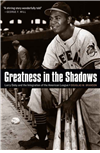
Professor Douglas M. Branson's Greatness in the Shadows: Larry Doby and the Integration of the American League writes passionately about Larry Doby's integration of the American League. Branson notes in his preface that the purpose of his research is not necessarily to write about Doby's life and baseball career, as the book is not a biography, but rather to investigate why Doby has received such little attention from researchers, writers, and journalists.
Branson introduces the reader to Larry Doby in Chapter 1, noting that approximately 55 books have been written about Jackie Robinson versus just one on Doby, Branson's childhood hero. In Chapter 2 Branson notes the two sides of Branch Rickey; the businessman who consistently traded / sold players in his days with the St. Louis Cardinals and the Brooklyn Dodgers, and the religiously, social conscious individual who possessed a sense of equality of all people regardless of ethnicity. Branson explains the difference between Rickey and Bill Veeck in Chapter 3, describing Veeck as a casual, creative, open-minded individual and an innovator who employed unique marketing and management ploys. The well educated Veeck remained dedicated to social equality and served as a member of the NAACP. Unlike Rickey, Veeck reimbursed Negro League owners, paying Effa Manley of the Newark Eagles for signing Larry Doby.
Chapters 4 and 5 present a short biography of Larry Doby, and Doby's integration of the American League and his career in baseball through the mid-1950s. Branson challenges author James Hirsch's assessment of Doby as docile and uneducated, proving the opposite to be true. Doby played for the Newark Eagles after World War II, signing with Bill Veeck and the Cleveland Indians in 1947. Branson emphasizes the lack of transitioning Doby experienced in comparison to Jackie Robinson. He explains the negative relationship that Doby had with Cleveland managers, Hank Greenberg and Al Lopez, both of whom displayed a racist attitude and treated Doby poorly.
In Chapter 6 Branson delineates the history of the color line in baseball beginning in the 19th century. While he credits Fay Young of the Chicago Defender, Syd Pollock, owner of the Cuban Stars, and writers Heywood Broun and Westbrook Pegler with promoting the integration of baseball in the 1930s, he omits the enormous contribution of sportswriter Wendell Smith until page 197 in Chapter 15. Branson explains how Veeck's plans to integrate Cleveland during WWII were thwarted through a phone call he made to commissioner, Kenesaw Mountain Landis. According to Branson, integration was a lengthy process that took two decades.
The key to Branson's work, I believe, lies in Chapter 7, "The Shadow Cast by Rickey and Robinson." Noting the close friendship between Robinson and Doby, Branson compares the two players and their vastly different personalities; Robinson outspoken and aggressive, and Doby quiet and unassuming. He notes that Robinson received four to seven times as much print as Doby, and that "there were few articles featuring Doby, very few when compared to the near ceaseless coverage the press gave to Jackie Robinson." Doby's "obscurity is not justified, not in the least" states Branson.
Branson goes to great lengths to demonstrate why Larry Doby has remained in the shadows as an integrating pioneer. In Chapters 8 and 9, Branson discusses the differences between the cities of Cleveland and New York, as well as playing in the American League versus the National League. He delineates the history of Cleveland, demonstrating its notoriety both economically and sport wise in the late 1940s. However, he also notes that the National League led when it came to integration, with the Boston Red Sox and Detroit Tigers of the American League serving as the last two teams to integrate.
Fans of Satchel Paige may be taken aback with Chapter 10, "The Long Shadow of Satchel Paige." Branson questions whether Doby's baseball achievements may have gone unnoticed because of Paige. While historians view Paige in various ways, some as an entertainer and others as a shrewd businessman, Branson credits Paige for his skill, longevity, and image. However, he also attempts to debunk the Paige "legend" in describing Paige's relationship with women and penchant for jumping contracts. Branson calls out Paige biographer, Larry Tye, for excusing Paige's off the field behavior, referring to Paige as a "Stepin Fetchit" comedian.
In Chapter 11, Branson discusses the reason why he believes that Satchel Paige was not likely to be the first African-American to integrate the Major Leagues. Paige had not served in the military, which was important just after WWII. According to Branson, Paige's on field performance saw limited time, with 13-14 starts each season in the Negro Leagues, and he played against many mediocre teams. With a questionable personal life and lack of professionalism at times, Paige would have been difficult to defend in 1940s America. Yet, Branson believes that the Paige "legend" and inaccuracies about his life continue. He defends Larry Doby's ability with statistics, noting that Doby remains in the shadow of Satchel Paige.
Doby was likely overshadowed by Mickey Mantle as well, according to Branson. Stating that approximately 58 books have been written about Mantle, Branson discusses Mantle's life and career briefly in Chapters 12 and 13. Mantle, a superb player, stated that the media exaggerated his injuries and pain. Mantle
had no mentor, and Joe DiMaggio refused to speak with him. Branson believes that Mantle's legend continues to grow, in part though because of the famed "tape-measure home run" in April 1953 at Griffith Stadium, obscuring the achievements of players such as Larry Doby, Roger Maris and Josh Gibson. Mantle's teammates respected him. He was humble, modest, and loyal, and helped friends out financially. Branson believes Mantle's legend has, in part, blocked the accomplishments of Larry Doby.
Branson devotes Chapter 14 to "Willie Mays and 'The Catch'." Mays and Doby became friends during preseason games in Arizona between the Giants and the Indians, and while barnstorming together following the regular baseball season. Branson believes that Mays faced less discrimination than Doby in housing and on the field, describing Mays as coddled and protected. Like Jackie Robinson, Mays had a chaperone, while Doby had none. Monte Irvin served as Mays' roommate, and Leo Durocher, the Giants General Manager, was a second father to Mays. Yet, stereotypes from the press remained. Mays' lack of involvement in civil rights drew criticism from Jackie Robinson, and west coast sports writers, who Mays viewed as racist, wrote negatively about him. In the first game of the 1954 World Series, Mays made a spectacular catch of a ball hit by Vic Wertz at the Polo Grounds in New York. This play prevented Larry Doby from scoring and the Giants ended up winning the game in extra innings. "The Catch" became legendary but may have masked Mays' other achievements in baseball. And while Mays began his Major League career four years after Doby, Branson beliefs Doby has suffered in the shadows of Mays' fame over the years.
Chapter 15 delves into Larry Doby and Jackie Robinson's relationship with the press. Cleveland writers criticized Doby for being a family man, who didn't smoke or drink, but failed to mention the discrimination he encountered in segregated housing. Teammates had virtually nothing negative to say about him. The humble Doby suffered all the abuse as Robinson but did not share the limelight. Branson opines, "Robinson (in New York) seems never to have had to fly through the flak that Larry Doby had to navigate in Cleveland." Unlike Doby, Robinson assumed a spokesman's role and New York sports writers may have felt intimidated from his approach and intelligence, and so they either applauded him or left him alone. Robinson's relationship with Wendell Smith gave him more print. Smith had regularly corresponded with Branch Rickey for a number of years, suggesting that Jackie Robinson be drafted.
Branson summarizes Doby's last few years of play followed by his years of coaching, and work with the NBA in Chapter 16. Doby bounced from Detroit to Chicago to San Diego to Toronto for two years. After playing in Nagoya, Japan in the 1962 season, he retired. Doby spent five years coaching with the Montreal Expos. Though Cleveland hired him in 1974 to coach, Frank Robinson, the new and first African American team manager, fired Doby and publicly criticized him for purportedly segregating the Cleveland team. Doby returned to the Expos for three years. In 1978, he became the second African-American manager when Bill Veeck hired him for his White Sox team. When attendance failed to increase, though, Veeck fired Doby. After coaching with several White Sox farms teams for a year, Doby returned home. In the 1980s, Doby served as the Director of Community Relations for the NBA's New Jersey Nets and in 1996 Gene Budig, the American League President hired Doby and Bob Gibson as "on-field assistants" for the league. In 1998, Larry Doby was elected into the Baseball Hall of Fame in Cooperstown, NY.
What Jackie Robinson and Larry Doby experienced as the first two African-Americans in the Major Leagues in discussed and compared in Chapter 17. Branson reviews Robinson's integrated experiences in college and in the army, and the gag agreement made with Branch Rickey when drafted by the Dodgers. Veeck never held Doby to a gag agreement. Unlike Robinson who had a year with the Montreal Royals to prepare for the Majors, Doby immediately joined the Indians. Though he initially faced obstacles with some of his Dodger teammates, Robinson's play quickly brought them on his side. While Rickey made sure that Robinson was treated equal to his teammates in housing, Doby faced exclusion from the Santa Rita Hotel in Tucson, staying instead in a private home during spring training for seven years. Both Robinson and Doby initially found supportive managers but in 1950 Doby played under Al Lopez, a man who demonstrated insensitivity to minority players. Robinson played for a league more open to integration, while Doby experienced a more difficult time with a league less desiring of integration.
Branson finishes his narrative in Chapter 18 by noting the recognition that Larry Doby received in the late 1990s near the end of his life, such as honorary degrees, induction into Halls of Fame, and permanent retirement of his Cleveland uniform number of 14. Following induction into the Baseball Hall of Fame in Cooperstown, however, Doby seems to have been overlooked and fallen into the shadows of history. Whatever the reason or reasons, Branson believes that Larry Doby has yet to receive the recognition he deserves.
Branson uses well-written and researched books on Larry Doby, Mickey Mantle, Satchel Paige, Branch Rickey, Jackie Robinson and others as prominent sources for his premise. He divides each of the 18 chapters into sub-topics with headings. While the easy to read narrative is thought provoking and well documented, a much greater use of primary evidence would enhance Branson's thesis.
Readers familiar with the integration of Major League baseball will be disappointed in the lack of credit given Wendell Smith early in the text. Branson questions the "hullabaloo" over Satchel Paige, but negates the fact that Paige drew crowds and kept many Negro League teams in business. Perhaps the legally segregated Jim Crow era in which Paige played required Paige's "Stepin Fetchit" approach to baseball for economic survival. Finally, to measure and compare the amount of discrimination suffered by Jackie Robinson, Willie Mays, or Larry Doby is simply not possible. Despite the support that Robinson received from the Dodger organization, his body also suffered the physiological effects of the racism he was forced to endure without response, a requirement not made by Bill Veeck of Larry Doby, and many people believe he died at an early age as a result.
Despite these concerns, Greatness in the Shadows: Larry Doby and the Integration of the American League gives historians and sports fans food for thought concerning the history of the Integration of Major League Baseball and the life and legacy of Larry Doby.
Greatness in the Shadows: Larry Doby and the Integration of the American League. By Douglas M. Branson. Lincoln: University of Nebraska Press,
2016. 336 pages. Hardbound. $34.95.
Copyright © 2016 by Susan J. Rayl