man versus ball
Reviewed by Connie Ann Kirk
13 may 2015 archive
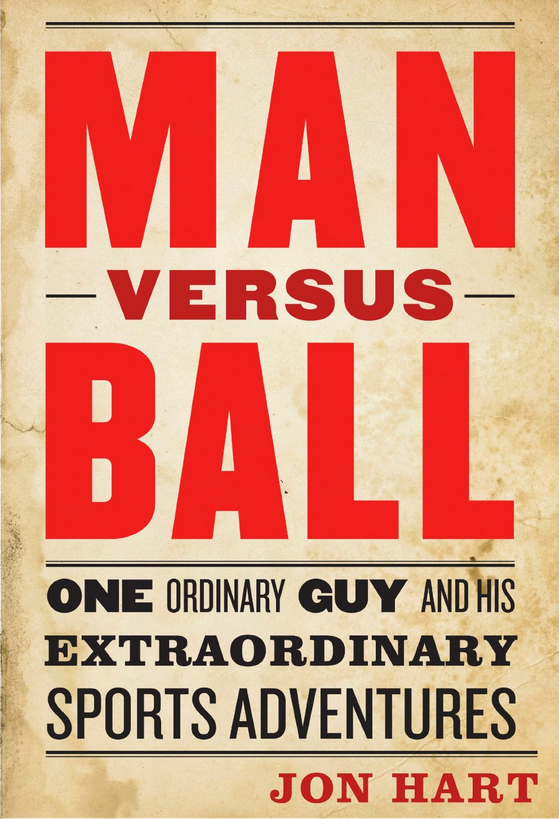
Jon Hart's memoir about his experiments working in jobs at the fringes of professional sport takes a bold move from the start – it contains an unlucky 13 chapters. Perhaps this is on purpose, since the jobs he writes about could be said to be occupied by the unlucky people associated with sport – those who are not star athletes who get the lucrative playing contracts, promotion deals, and then the glamorous TV commentary spots in retirement. This book is about the jobs "ordinary" people fill, those who have had to lower the sights on their dreams a little bit but who still desire the level of seriousness and intimacy with sport that can only be achieved by allowing one's livelihood to fully depend on its playful uncertainties.
Just as there is on the playing field in front of the television cameras, there are training exercises, politics, and hierarchies in lowly supporting positions such as selling hotdogs at baseball games, chasing down loose tennis balls at professional matches, or rousing crowds to their feet from inside a malodorous team mascot's costume. Though he furthers these people's anonymity by identifying them by nicknames only, Hart writes best when he resists the temptation for caricature and describes with respect, compassion, and humor the people he meets who occupy these positions. Their stories are not told directly, though, but instead through Hart trying on their jobs for size for a while in part, he says, but not always, he admits, for the purpose of writing about what they are like. Think Bobbie Ann Mason meets George Plimpton.
The 13 chapters are preceded by a brief introduction called "Pre Game" and are broken up between Chapters 7 and 8 by a "Halftime" show of encouragement to the reader. The chapters are then followed by a brief afterword Hart calls "Overtime." Chapters and the jobs Hart writes about in each are: – Part I: "Plimpton," (semi-pro football player for the Brooklyn Mariners); "Welcome to the Major Leagues," (vendor at Yankee Stadium); "School of Hard Knocks" (professional wrestling student); "Smells Like Team Spirit" (team mascot); "Invisible at the U.S. Open," (ball-boy/man); "Amateur Caddie," (what you think); and "The Real Rollerball" (player in the National In-Line Basketball League; who knew?).
Part II chapters are: "Back to the Majors," (vending now at Shea Stadium); "Extra Innings," (vending at Citi Field); "World Cup for Roller Suckers," (roller soccer player; who knew, again?); "Racing up the Empire State Building," (what it says); "Spring Training," (vendor at the Red Sox training camp in Fort Meyers, Florida); and "Old-Fashioned Hardball" (vintage baseball with the New York Gothams). The book opens with "Acknowledgments" and closes with a facetious paragraph "About the Author." The book does not have a bibliography, illustrations, or index. While readers will find different occupations engaging for their own reasons, one of the most memorable stories from the book for most readers would arguably have to be the one about vending at Yankee Stadium. At the time when Hart worked there and throughout the 1996 World Series (worth reading in itself for the description of a Series atmosphere from a vendor's point of view), old-timers and veterans made the most commission (18 percent + tips) and were assigned to sell beer to fans enjoying the game from the most expensive seats. Neophytes, he says, got handed ice cream to sell on chilly nights in April.
Venders really don't get to watch the game, he says. They are too busy moving, shouting (which he found "cathartic"), and selling (36). It was against stadium rules for them to throw a package of peanuts or anything else down a row to a customer, apparently because of fear of potential lawsuits (Peanuts? Popcorn? Concussion? Really? Hmm …). Selling dogs "requires more concentration," he notes, than selling other items, because of the finesse involved in preparing the hotdog, bun, napkin and condiments, all while standing with no table to work on and without touching the food (42). Carrying heavy trays up and down many steps in the heat, shouting all the way, involves its own level of athleticism. "Vending is exhausting," Hart admits, yet he returns to it again and again throughout the book (36), though by the end he says he has hung up his vending vest for good.
Hart does perhaps his greatest public service in this book when he discloses information from his vending experience that every spectator at a ballgame ought to know. What it comes down to is a cautionary tale about purchasing drinks in open cups. Vendors, working up both a sweat and a thirst, have been known, he says, to drink from the cups, replace them, and then sell them newly filled to customers. "How many customers drink out of cups that were first used by vendors?" Hart asks for the reader. "Damn good question," he replies (36). Then there are the vendors who pick up used beer cups from the ground and cheat at increasing their take for the day by doing the same thing … (38).
This is just one example of many stories in the book that may give readers pause, turn on light or insight, or generate a laugh or two. While in-depth profiles of the people he meets, rather than a story of trying out their jobs for a time, might be of more interest to some readers, Hart's book lifts the rock and begins shedding light on some of these lesser-explored regions of sport culture. For this reader, bringing ordinary people and their connections to sport out into the light is neither a bad thing, nor an unlucky one.
Hart, Jon. Man Versus Ball: One Ordinary Guy and His Extraordinary Sports Adventures. Dulles, Virginia: Potomac Books, 2013. 184 pp. Hardcover,
$24.95. ISBN-10: 1612344143; ISBN-13: 978-1612344140.
Copyright © 2015 by Connie Ann Kirk